Performance in die systems is determined not only by design and material selection. Surface characteristics also directly affect production quality. Particularly in companies engaged in high-quantity production, correct coating applications reduce wear while lowering maintenance costs and supporting production continuity. For this reason, die coating applications are an integral part of die design.
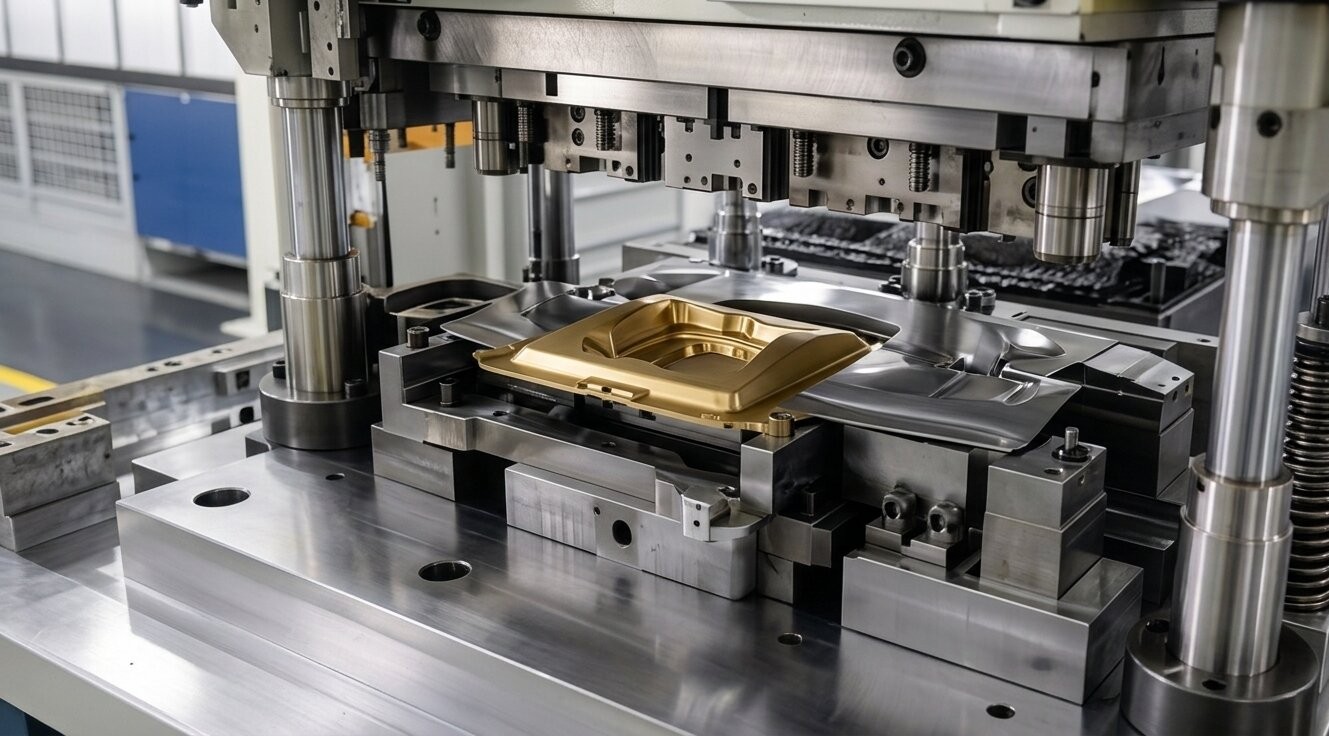
Die components are continuously exposed to friction, pressure, and temperature during production. These conditions can over time lead to surface deformations, dimensional losses, and quality problems. Surface coatings reduce these effects and allow the die to operate stably for longer.
Especially in progressive and transfer dies used in the automotive, white goods, and electronics sectors, surface quality is very important. Modern die coating solutions are an important investment that increases production efficiency and product quality. Coating technologies not only provide protection; they reduce friction, minimize sticking, and extend maintenance intervals.
When selecting a coating, the material to be processed, temperature, and working conditions should be evaluated together.
TiN (Titanium Nitride) Coating
TiN coating is a surface coating technology known for its golden appearance and used for many years. Because of its high hardness, it is widely preferred in cutting and forming die components.
It provides successful results especially in systems working at low and moderate temperatures. It reduces surface wear in sheet forming, drilling, and cutting operations. One of the most important advantages of TiN coating is that it is economical. Additionally, it increases surface hardness while supporting mold life extension goals.
TiAlN (Titanium Aluminum Nitride) Coating
TiAlN coating has been developed for applications working at high temperatures. Thanks to the aluminum in its content, it creates a protective oxide layer under high heat. It maintains its performance for a long time in pressing and forming operations where temperature is intense. It offers advantages with hard-to-machine materials like stainless steel.
DLC (Diamond-Like Carbon) Coating
DLC coating stands out with surface hardness properties close to diamond and very low friction coefficient. It is preferred especially in applications where surface sticking is critical. It provides successful results with materials prone to surface adhesion such as aluminum, copper, and galvanized sheet.
By reducing friction, it also contributes positively to energy consumption. In manufacturing requiring high surface quality, DLC coating helps reduce scratches and surface defects.
CrN (Chromium Nitride) Coating
CrN coating stands out with high corrosion resistance. It is preferred in humid working environments or aggressive production conditions. It provides successful results in stainless steel forming operations. Additionally, it reduces surface sticking, helping to decrease die maintenance frequency. It is among the effective solutions used for the purpose of preventing die wear, especially in long production runs.
|
Coating Type |
Basic Feature |
Usage Advantage |
|---|---|---|
|
TiN |
High hardness |
Provides wear resistance |
|
TiAlN |
High heat resistance |
Performance in hot working |
|
DLC |
Low friction |
Reduces sticking |
|
CrN |
Corrosion resistance |
Humid environment durability |
Coating selection directly affects many processes from production costs to product quality.
Wear Resistance and Die Life
One of the biggest enemies of dies is wear. On continuously running production lines, surface losses over time lead to dimensional deviations. Therefore, coatings providing high hardness offer significant advantages in terms of wear resistance and die life. Less maintenance need and longer service life provides cost advantage.
Low Friction and Part Quality
As friction increases, surface errors and deformation risks rise. Coatings with low friction coefficient allow the material to move more controllably on the die surface.
This especially facilitates reaching the high part precision levels demanded in the automotive and white goods sectors. Smoother surfaces, lower scrap rates, and more stable production processes mean.
Sticking and Adhesion Problems
Some metals can stick to the die surface during forming. This reduces product quality while causing the die surface to be damaged. Coatings such as DLC and CrN reduce sticking by preventing adhesion problems. Thus, the time allocated for cleaning and maintenance on the production line is reduced.
Coating selection should not be made by looking only at hardness values. All production conditions should be evaluated together and the correct coating suitable for the application should be selected.
Type of Sheet to Be Machined
Materials such as stainless steel, galvanized sheet, aluminum, and copper have different friction behaviors. For example, aluminum tends to stick to the surface more easily while stainless steel can create a higher abrasive effect.
Sheet Thickness
As material thickness increases, the loads generated during forming increase. Therefore, the mechanical strength and hardness of the coating to be used should be suitable for production conditions.
Working Temperature
Especially in high-speed presses, temperature increase due to friction is observed. Coatings that can maintain performance at high temperatures should be preferred.
Press Speed
As press cycle increases, friction and thermal loads on the surface also increase. This is an important criterion in coating selection.
Production Quantity
Low-quantity and high-quantity production create different expectations. For long-term mass production, coating solutions providing higher durability are preferred.
Surface Quality Expectation
If surface quality of the final part is critical, coatings that reduce friction and prevent sticking stand out.
Coating Thickness
The same value is not suitable for every application. The coating thickness to be used should be determined by considering material properties, working loads, and expected service life.
As Kahraman Kalıp, with our experience in sheet metal die manufacturing, we support the determination of surface coating options suitable for project needs. Production conditions are analyzed and the most suitable solutions are evaluated in accordance with the die's intended use, material to be processed, and targeted production quantity.
Through correct coating applications, maintenance costs can be reduced, production continuity can be increased, and quality standards can be made more sustainable. Especially for companies engaged in high-quantity production, coating investments can provide significant returns in a short time. Adjust your route toward Kahraman Kalıp to improve die performance; gain competitive advantage in the sector.
Why is die coating used?
It is used to reduce wear on die surfaces, lower friction, and extend die life.
Which coating is the most durable?
It varies depending on the application, but TiAlN and DLC coatings are among the high-performance options.
Can the same coating be used on every die?
No. The correct coating is selected based on material type, temperature, and production conditions.
Who Is This Article Useful For?
Highlights
References